
News
Latest Digital T-Shirt Printing Technology 2026: DTF Vs DTG And POD Opportunities
Oct
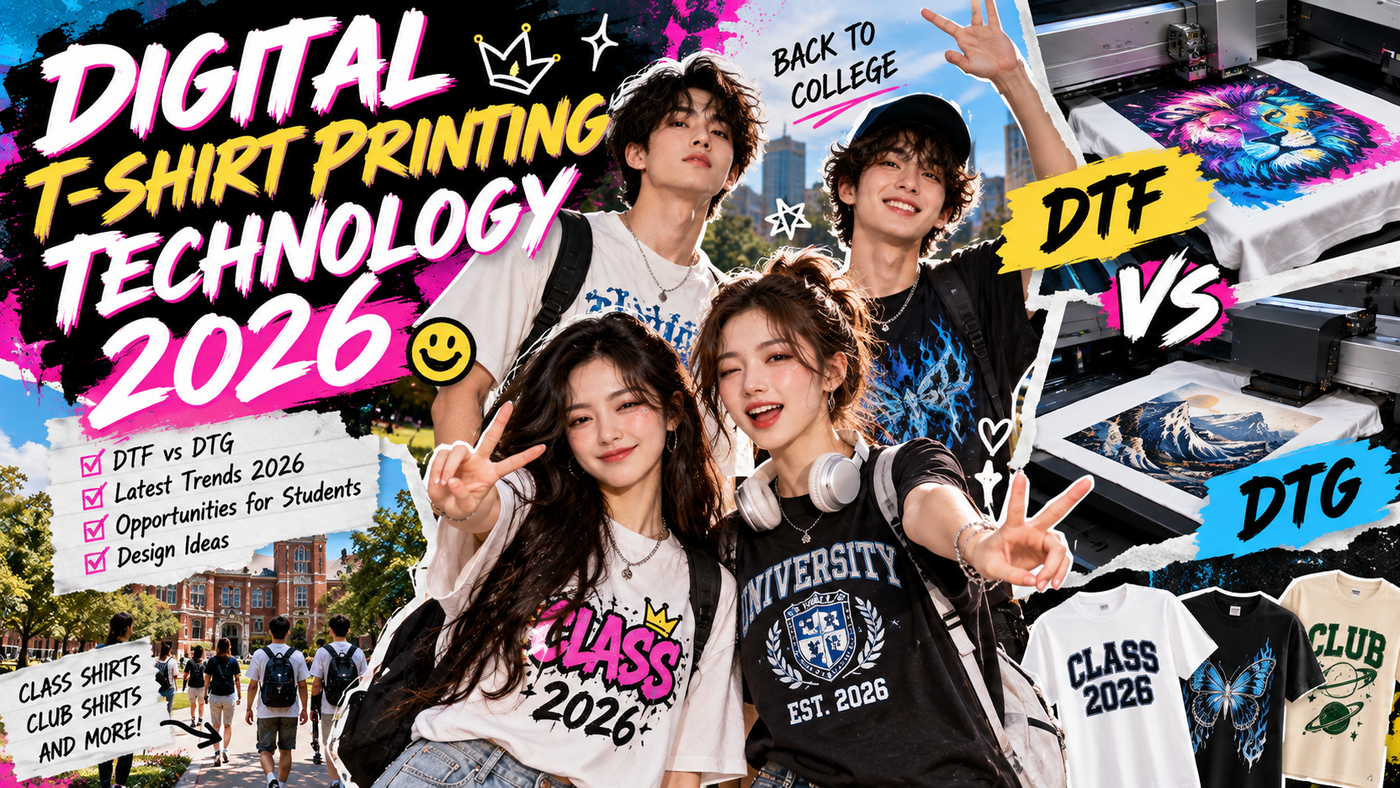
The latest digital T-shirt printing technology in 2026 is emerging at a timely moment for reaching student communities. Updated university admissions data reported by the media shows admission scores ranging from 15 to 27.39 points. These figures do not measure POD T-shirt sales, but they do signal the back-to-school season and potential opportunities for shops preparing personalized class and club shirts using DTF or DTG printing.
Why Does 2026 University Admissions News Create Opportunities for the POD Market?
University admissions data does not directly prove demand for T-shirts, but it creates a seasonal moment when new students begin forming friendship groups, classes, and clubs. For POD shops, the key opportunity is to prepare products in time for the new academic year while validating actual demand instead of assuming that trending news will automatically generate orders.

What Do Admission Scores Tell Us — and What Don’t They Tell Us?
According to data provided by Báo Đại biểu Nhân dân and HaUI on August 10, 2026, university admission scores ranged from 15 to 27.39 points. Dân trí also provided updates on admissions and academic-major trends on August 10, while Thanh Niên analyzed fields attracting applicants on August 7.
These reports show that university admissions are receiving significant public attention, but they are not data about the number of T-shirt orders.
Vietnam.vn summarized admissions developments during October 1–3, 2026, a period when many first-year students were beginning their university routines. This provides a reasonable basis for shops to observe seasonal demand, but it is not sufficient evidence for predicting a specific growth rate.
It is therefore important to distinguish between three types of information:
- Cited news: Admission scores and admissions developments from the sources mentioned above.
- Commercial inference: The beginning of the academic year may create opportunities for class shirts, club shirts, and personalized products.
- What needs verification: Search volume, purchase inquiries, conversion rates, and the scale of demand in individual locations.
Making these distinctions helps prevent both content and business planning from turning a social signal into an unsupported claim about sales.
Why Could Group Shirts Work During the Back-to-School Season?
Group shirts serve an easily recognizable need in university environments: creating a shared identity for classes, groups of friends, clubs, and events.
Personalized designs allow each group to express its own identity, but the decision to order shirts still depends on budget, timing, quantity, and agreement among members.
For this reason, shops should think in terms of selling a solution for a specific occasion rather than simply promoting “new printing technology.”
A collection for first-year students could include welcome designs, academic-major themes, club designs, and options for adding group names. Each idea should ideally have a preview so customers can visualize the finished product before confirming an order.
Who Can Benefit, and Who Should Be Cautious?
Students and group organizers gain more ways to express their identity, but they need to agree on designs and budgets early.
POD shop owners may have an opportunity to capture seasonal demand, but they must balance order-processing capacity, sample quality, and delivery schedules.
Printing providers may receive additional personalization requests, but they should only promise results that have been tested on actual samples.
Those who should be most cautious are businesses investing solely because a news topic is trending. Producing large quantities in advance or advertising specific durability, color quality, or production times without sample data and confirmation from the printer can increase risk.
Use customer feedback and pre-orders as evidence for adjusting your approach.
Latest Digital T-Shirt Printing Technology 2026: DTF or DTG?
DTF and DTG are both options in digital apparel printing. However, the available information provides clearer confirmation of certain DTF applications, including printing very small details and complex gradients, which may make it worth considering for modern class or club shirt designs.
There is not enough technical data in the provided material to conclude that one technology is always better than the other for every T-shirt design.
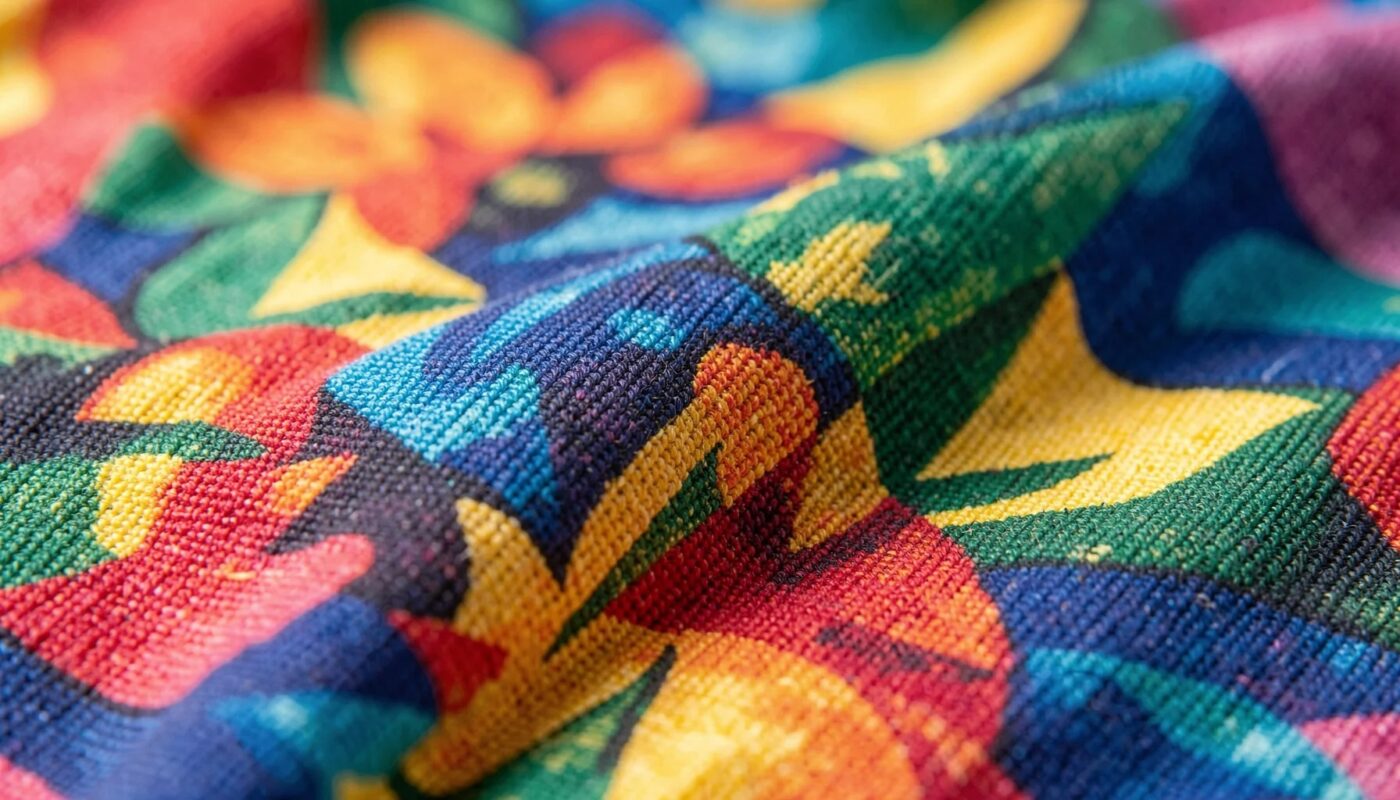
Latest DTG vs. DTF Comparison for 2026
The table below includes only points supported by the information provided. Areas without sufficient specifications are clearly identified as factors that should be confirmed with the printing provider rather than making assumptions about cost, durability, or material compatibility.
| Criteria | DTF | DTG |
|---|---|---|
| Stated applications | Can handle very small details and complex gradients | Identified as one of the current digital printing technologies, but no specific application specifications are provided in the source data |
| Situations worth considering | Class or club shirts featuring detailed artwork or gradients | Ask the printer for recommendations based on the design, base garment, and actual production process |
| What to verify before ordering | Actual print samples, detail and color reproduction, usage instructions, and warranty conditions if applicable | Actual samples, conditions applicable to the intended product, and care instructions |
| Data that should not be assumed | Cost, speed, wash durability, and compatibility with every type of garment | Cost, gradient capabilities, design limitations, and durability |
| How to make a decision | Compare test prints with the design and intended use | Ask the printer to explain specifications and provide samples and a quote for the specific order |
This table does not replace the technical specifications provided by a printer. When comparing quotes, send the same design file, the same intended garment type, and the same quantity to each provider.
If different printers prepare quotes based on different conditions, the lowest price may not necessarily represent the most suitable option.
Why Is DTF Getting Attention for Class Shirts?
The key distinction highlighted in the source information is DTF’s ability to reproduce small details and complex gradients.
This can be relevant for designs that combine text, group symbols, and gradient elements. However, the performance of a particular design must still be checked through an actual printed sample. A description of the technology cannot replace sample approval.
The phrase “DTF T-shirt printing technology 2026 for class shirts” should therefore be understood as an area worth exploring rather than a guarantee that DTF is appropriate for every order.
For simpler designs, limited budgets, or specific base-garment requirements, ask the printer to compare technical options and finished samples.
What Should You Ask Before Choosing a Printing Technology?
Before approving an order, shop owners or class representatives can ask the printing provider:
- Have you printed a similar design before? Ask to see close-up photos or physical samples featuring small text, fine lines, or gradients.
- What conditions does the quote cover? Clarify quantity, garment type, print dimensions, and any potential additional charges.
- How does sample approval work? Confirm who approves the sample, how many revision rounds are allowed, and when the order enters production.
- Are care instructions provided? Request instructions specifically for the chosen product instead of assuming that every printing method requires the same care.
- How are errors handled? Ask in advance about incorrect colors, print placement errors, missing products, or items that do not match the approved sample.
These questions turn promotional claims about printing technology into answers that can be checked while reducing misunderstandings between customers and printing providers.
POD T-Shirt Design Trends for Gen Z in 2026: Sell Identity, Not Just Graphics
POD T-shirt design trends for Gen Z in 2026 should begin with communities and occasions before deciding on artwork and printing methods.
The university admissions season suggests potential themes for first-year students, but a design only has the potential to become a sellable product when the intended audience identifies with it and is willing to place an order.
Build Collections Around Specific Communities
Instead of releasing a generic shirt labeled “for students,” divide ideas into recognizable groups:
- Freshman shirts: Graduation cohort, enrollment year, or welcome messages.
- Class shirts: Group-specific symbols, slogans, or inside jokes.
- Club shirts: Visual identity for clubs, events, or activities.
- Major-themed shirts: Graphics or text selected by students from a particular field of study.
- Friend-group shirts: Simple designs personalized with names or roles when appropriate.
These are creative directions, not evidence that a particular theme will definitely sell well. Test several concepts, conduct surveys, and measure responses before investing significant time or resources in production.
How Can Designs Take Advantage of Detailed Printing?
For DTF, the source data highlights the ability to reproduce very small details and complex gradients. These capabilities could be used for group symbols, monograms, gradient graphics, or layered illustrations.
However, adding more details does not automatically make a design better. Printed artwork should remain readable at its actual production size and maintain a recognizable identity when viewed from a normal distance.
A simple creative approval process might include:
- Finalize the message and target wearer before creating the artwork.
- Create two or three genuinely different layouts instead of simply changing colors.
- Preview the design on a T-shirt mockup to evaluate placement and size.
- Send the final file to the printer and request a test sample when details or colors are important.
- Confirm production only after the group’s representative approves the sample and ordering conditions.
Avoid Common Mistakes When Following Trends
Mistake #1: Using news instead of customer research. The admission-score range of 15–27.39 points describes university admissions. It does not reveal which shirts students want, how much they are willing to pay, or when they will order. Validate demand through surveys, interest lists, or pre-orders.
Mistake #2: Making excessive claims about technology. Do not advertise a method as “the most durable,” “the best,” or capable of “printing everything” without specific evidence. Describe only what the printer can confirm and clarify which results depend on the garment, design, and production process.
Mistake #3: Delaying approval. Group shirts often require agreement among several people. Without a designated approver, response deadline, and revision process, an order can be delayed even when the design itself is ready.
Action Plan for POD Shops and T-Shirt Buyers During Back-to-School Season
An effective approach is to prepare early, test demand on a small scale, and expand only when customer signals support it.
For shops, the goal is not to purchase equipment or hold large amounts of inventory simply because a printing technology is receiving attention. The goal is to select the right partner, garment, and workflow for a specific type of order.
Four Steps to Turn a Market Signal Into a Product
Step 1: Choose the target customer and selling occasion. Decide whether to focus on class shirts, club shirts, freshman shirts, or a specific event. Avoid treating all university students as one customer profile.
Step 2: Validate the design. Present several options, ask the target group which design they prefer, and estimate how many people are genuinely likely to order. Track interest in individual designs instead of relying only on social-media likes.
Step 3: Request quotes and test samples. Send the same information to multiple printers, including the design, estimated quantity, preferred garment type, and required deadline. Compare sample quality, consultation, quote conditions, and the provider’s ability to handle changes.
Step 4: Scale only after the first orders generate useful data. Track on-time deliveries, customer feedback, production errors, and frequently asked questions. Use these observations to improve designs and processes for future orders.
How Should Buyers Choose a Digital T-Shirt Printing Provider?
When looking for a high-quality digital T-shirt printing provider in 2026, do not compare only the price per shirt.
Ask about the sample-approval process, color and print-position confirmation, expected turnaround time, procedures for handling errors, and care instructions.
A clearly defined quote is often more useful than a lower price that does not explain what is included.
If you have never ordered group shirts before, ask the printer to explain the available options in straightforward language. A suitable provider should help you understand the difference between your design requirements and what can realistically be produced rather than forcing you to interpret technical terminology on your own.
Kaiteez Perspective: Start Small and Learn From Real Orders
From the perspective of the Kaiteez Expert, university admissions news should be treated as a signal for starting conversations with student communities rather than a guarantee of sales.
Shops can publish content introducing T-shirt concepts, invite groups to submit design requests, and measure interest before committing to a production schedule.
Keep track of customers’ real questions: What occasion do they need the shirts for? What details does the design include? How many shirts are they considering? What is preventing them from ordering?
Those answers can help improve products more effectively than relying on broad market predictions. You can explore POD fashion articles and ideas on Kaiteez and then compare them with actual samples and quotes from printing providers before making a decision.
Frequently Asked Questions
Does the Latest Digital T-Shirt Printing Technology in 2026 Have to Be DTF?
No. The available data mentions both DTG and DTF while highlighting certain DTF applications involving small details and gradient colors.
Choose based on your artwork, product requirements, test samples, and verifiable recommendations from the printing provider.
Is DTF Suitable for Class T-Shirts?
DTF is worth considering when a class shirt design contains many details or gradient colors, according to the information provided.
Before ordering a large quantity, approve an actual sample and clarify the quote, production conditions, and care instructions.
Do 2026 University Admission Scores Prove That Demand for POD T-Shirts Is Increasing?
No. The admission-score range of 15 to 27.39 points reflects university admissions information, not T-shirt sales statistics.
It can be treated as a seasonal signal for shops to research demand among first-year students, but it should not be used as evidence of a specific increase in POD sales.
How Do I Choose a High-Quality Digital T-Shirt Printing Provider?
Send the same requirements to multiple providers so you can compare them under equivalent conditions. Review actual samples and clarify the approval process, expected timeline, error-handling procedures, and care instructions.
Do not make your decision based solely on price or general promotional claims about printing technology.
>>>Enjoy shopping at Kaiteez
