
News
Daisy Chain Fields: How Olivia Rodrigo Turned a Music Festival Into a $20 Million Charity Movement

Sep
Daisy Chain Fields: More Than Just a Music Festival
When Olivia Rodrigo launched Daisy Chain Fields, she was not simply creating another major music festival. She was building a platform that connected music, fandom, women in the industry, nonprofit organizations, and charitable giving.
The inaugural Daisy Chain Fields took place on August 29, 2026, at Great Park in Irvine, California. The one-day festival sold out and attracted approximately 45,000 attendees. Most importantly, the event ultimately generated $20 million for organizations supporting women and girls, turning Rodrigo’s first festival into one of the most significant music-and-philanthropy stories of 2026.
The festival was inspired in part by Lilith Fair, the influential women-centered music festival founded by Sarah McLachlan in the 1990s. But Daisy Chain Fields adapted that idea for a new generation, combining contemporary pop stars, alternative and rock artists, legendary performers, nonprofit activism, fashion, art, and social impact.
What Is Daisy Chain Fields?
Daisy Chain Fields was created by Olivia Rodrigo as both a music festival and an impact platform designed to bring artists, fans, and nonprofit organizations together around issues affecting women and girls.
The name itself reflects the concept behind the festival. A daisy chain is made from individual flowers connected together, symbolizing how individual people can become stronger when they work collectively. The festival’s organizers described the concept as being rooted in joy, creativity, community, and collective action.
Rather than treating charity as something separate from the concert experience, Daisy Chain Fields incorporated its philanthropic mission directly into the festival.
Attendees could visit Daisy Chain Reaction, a philanthropy area where nonprofit partners introduced fans to their work and encouraged them to learn more and get involved. Women-led businesses, makers, and artists were also represented throughout the festival grounds.
This approach helped make the event feel like more than a traditional concert: music was the attraction, while philanthropy was the purpose.
Daisy Chain Fields 2026 Lineup
One of the festival’s biggest strengths was its carefully curated, cross-generational lineup.
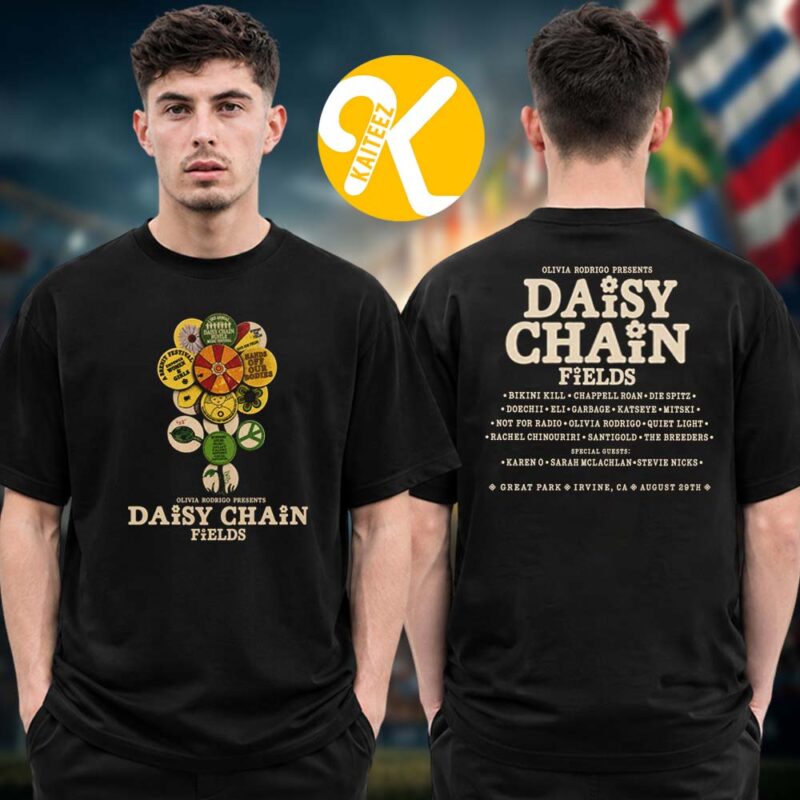
The original announcement presented a women-led bill featuring artists from pop, alternative, punk, rock, and hip-hop. The lineup included:
- Olivia Rodrigo
- Chappell Roan
- Doechii
- Mitski
- Garbage
- Bikini Kill
- The Breeders
- Santigold
- Rachel Chinouriri
- Die Spitz
- Eli
- Not For Radio
- Quiet Light
- KATSEYE
The festival also announced special appearances from Sarah McLachlan, Stevie Nicks, and Karen O.
There were also some last-minute changes. KATSEYE withdrew shortly before the festival because of an injury, with Devon Again joining the performance lineup. Karen O was unable to appear because of a family emergency, and Alanis Morissette ultimately made a surprise appearance during Rodrigo’s set.
The result was a particularly diverse lineup that connected several generations of female artists.
A Lineup Designed Around Different Generations
The festival succeeded because it did not rely exclusively on current pop stars.
Chappell Roan and Doechii represented some of the most recognizable younger voices in contemporary music, while Mitski, Garbage, Santigold, and The Breeders brought established alternative and indie credibility.
Meanwhile, Bikini Kill represented the riot grrrl movement, while Sarah McLachlan and Stevie Nicks connected the festival to earlier generations of influential women in music.
That combination was one of Daisy Chain Fields’ most important creative decisions. It allowed younger fans to discover artists from previous generations while longtime music fans could experience a new generation of performers.
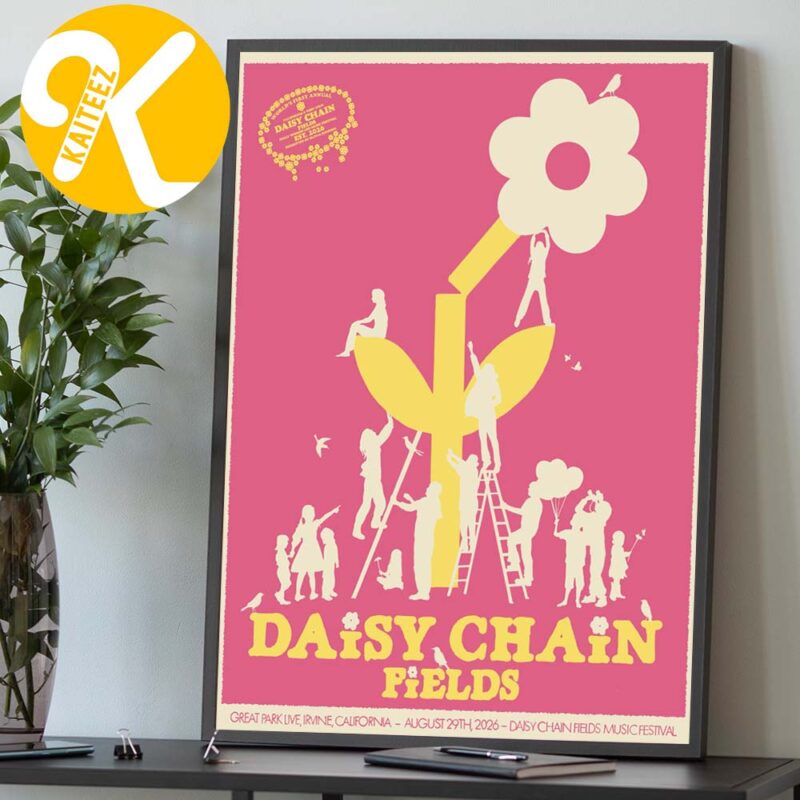
Olivia Rodrigo’s Historic Headlining Set
Olivia Rodrigo closed the festival with a headline performance that became one of its defining moments.
Her set included music from her catalog as well as special collaborations with some of the artists who inspired her.
Sarah McLachlan joined Rodrigo on stage, creating a direct connection to Lilith Fair and the festival’s inspiration. Stevie Nicks also appeared, performing with Rodrigo in one of the most emotional moments of the night.
Rodrigo also surprised the audience with Alanis Morissette, who stepped in after Karen O’s cancellation. Their appearance demonstrated how the festival could combine contemporary stars with legendary artists in unexpected ways.
The result was more than a headline performance. It became a symbolic passing of musical influence between generations.
How Much Money Did Daisy Chain Fields Raise?
The biggest achievement of Daisy Chain Fields was its charitable impact.
Before the festival, Olivia Rodrigo announced that the event had already generated $10 million for its nonprofit partners through ticket sales, sponsors, and other contributions.
Then, during Rodrigo’s headline set, Melinda French Gates announced a $10 million commitment through Pivotal, matching the festival’s existing fundraising total.
That brought the total support generated by the inaugural festival to $20 million.
At an exchange rate of roughly $1 = ₫26,000, $20 million is approximately ₫520 billion, which explains why the event has been described in Vietnamese media as raising more than 500 billion VND.
Even more notable, the participating artists performed without receiving performance fees, allowing 100% of the festival’s net proceeds to benefit its nonprofit partners.
Which Organizations Benefited From Daisy Chain Fields?
The Daisy Chain Fields Fund supported 10 nonprofit organizations working across different areas affecting women and girls.
The beneficiaries were:
- Baby2Baby
- Black Mamas Matter Alliance
- Center for Reproductive Rights
- FreeFrom
- Jhpiego
- Johns Hopkins Center for Indigenous Health
- National Domestic Workers Alliance
- National Institute for Reproductive Health
- National Women’s Law Center
- Planned Parenthood
The organizations address areas including reproductive health, maternal health, economic justice, gender-based violence prevention, legal advocacy, Indigenous health, family support, and civic engagement. The $20 million commitment is to be distributed equally among the 10 organizations.
This broad approach was important because Daisy Chain Fields was not built around a single charitable organization. Instead, it created a network of organizations addressing interconnected challenges.
Why Was Daisy Chain Fields So Successful?
1. Olivia Rodrigo’s Enormous Fan Community
Rodrigo’s existing audience gave the festival an immediate foundation.
Her fans were not simply buying tickets to see one artist. They were being invited into a larger community built around music, creativity, and charitable action.
The result was a sold-out festival with an estimated 45,000 attendees.
2. The Lineup Reached Multiple Generations
The combination of Chappell Roan, Doechii, Mitski, Bikini Kill, Garbage, The Breeders, Sarah McLachlan, Stevie Nicks, and Rodrigo itself created a rare musical bridge.
Younger audiences could discover influential artists from previous decades, while established fans could experience some of the biggest names in contemporary pop.
3. Charity Was Built Into the Festival
Daisy Chain Fields did not simply donate a percentage of merchandise or ticket revenue after the event.
The entire event was designed around fundraising, with artists volunteering their performances and nonprofit organizations directly interacting with attendees.
That made the charitable mission visible throughout the festival experience.
4. It Created a Strong Cultural Identity
The festival had a distinctive visual and cultural identity built around flowers, femininity, nostalgia, punk influences, fashion, art, and music.
Festivalgoers embraced that identity through outfits, accessories, handmade items, vintage-inspired looks, and Daisy Chain-themed merchandise. Vogue noted the strong fashion presence, including daisy crowns, riot grrrl-inspired details, leather boots, and fan-created looks.
5. It Connected Music With Real-World Action
Perhaps the most important innovation was the connection between entertainment and participation.
Fans could enjoy performances and then walk into the philanthropy area to learn about the organizations receiving the money.
That helped transform the traditional relationship between celebrity, fan, and charity into something more interactive.
Daisy Chain Fields Merch and Its Cultural Impact
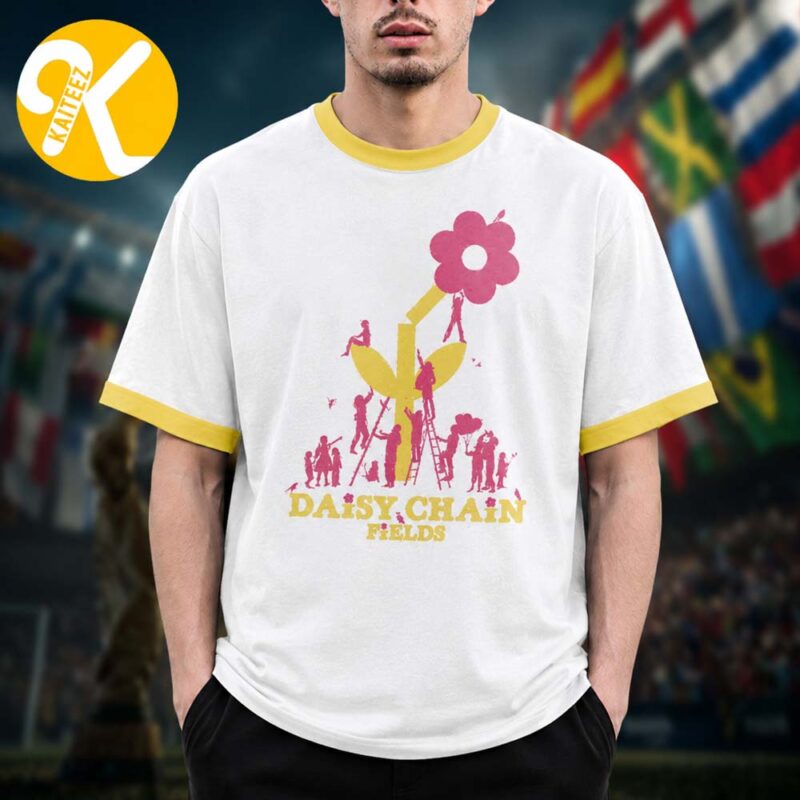
Merchandise became another way for fans to carry the identity of Daisy Chain Fields beyond the festival grounds.
The official Daisy Chain Fields website now promotes its 2026 merchandise collection, describing it as a way to represent the cause wherever you are, with net proceeds going toward the Daisy Chain Fields Fund.
This is particularly important for a festival built around community. A festival shirt, hoodie, tote, or accessory can become more than a souvenir—it can represent participation in a specific cultural moment.
For fans who attended the festival, Daisy Chain Fields merch can serve as a physical memory of the event. For people who could not attend, festival-inspired apparel offers another way to connect with the music, artists, and charitable mission.
The Legacy of Daisy Chain Fields
The first Daisy Chain Fields has already established an unusually strong legacy for a debut festival.
It brought together:
- Around 45,000 music fans
- A major women-led lineup
- Multiple generations of artists
- 10 nonprofit organizations
- A major philanthropic campaign
- Approximately $20 million in total charitable support
- A new platform connecting music and social impact
But perhaps the biggest achievement is the idea behind the festival itself.
Daisy Chain Fields demonstrated that a modern music festival can be designed around community and purpose, rather than treating philanthropy as an additional feature.
Its success also shows the power of celebrity-led fundraising when the celebrity’s audience, participating artists, sponsors, nonprofit organizations, and fans all contribute to the same objective.
The festival’s first edition has therefore created expectations for what could come next. The combination of a sold-out audience, major artists, strong cultural identity, and $20 million in charitable support gives Daisy Chain Fields a compelling foundation for future editions.
Daisy Chain Fields vs. Lilith Fair: The Connection
The influence of Lilith Fair is impossible to overlook.
Sarah McLachlan’s festival challenged the music industry’s assumptions about women performing together and became an important cultural event during the late 1990s. Daisy Chain Fields takes a similar concept and introduces it to a Gen Z audience.
The connection became especially meaningful when McLachlan appeared alongside Rodrigo during the festival.
In that sense, Daisy Chain Fields was not simply copying Lilith Fair. It was reinterpreting its philosophy for a new generation—with social media, modern pop culture, nonprofit engagement, contemporary fashion, and a younger audience playing much larger roles.
What Daisy Chain Fields Leaves Behind
The most lasting image of Daisy Chain Fields may not be a single performance or celebrity appearance.
It is the idea of individual people becoming stronger when connected.
Olivia Rodrigo used her position as an artist to bring together thousands of fans, dozens of performers, major cultural figures, businesses, and nonprofit organizations. The result was a festival that generated both a memorable music experience and a significant charitable contribution.
With $20 million raised, approximately 45,000 attendees, and a lineup spanning Chappell Roan and Doechii to Bikini Kill, Garbage, Sarah McLachlan, and Stevie Nicks, Daisy Chain Fields made a remarkably strong debut.
Whether it becomes an annual festival or grows into a broader philanthropic platform, its first edition has already demonstrated the potential of music fandom as a force for collective action.
Daisy Chain Fields was not only a festival. It was a statement that music, community, and generosity can be connected—and that one person’s idea can become much more powerful when thousands of people join the chain.
>>>Enjoy shopping at Kaiteez
>>>More merch about Daisy Chain Fields Festival 2026
